

Ashleigh is a content writer with an educational background in media marketing and creative writing. With a strong background in health and wellness writing, Ashleigh is dedicated to crafting info... Read More
Breakthroughs in Epilepsy Care: NHS Roll Out Minimally Invasive Surgeries

For the majority of patients with Epilepsy, their seizures can be effectively managed through anti-seizure medication.
However, for approximately one-third of patients with epilepsy, these initial treatments are not enough. Fortunately, the NHS continues to advance its epilepsy care for those requiring further treatment through new tools and technology, such as laser therapy and implants.
Some treatments beyond medication that we have covered in our previous blogs include neurosurgery, dietary changes, and Vagus Nerve Stimulation (VNS) Therapy. In May 2024, the NHS announced that it would soon roll out a new treatment for drug-resistant epilepsy in the form of laser therapy.
This treatment, called Laser Interstitial Thermal Therapy (LITT), is a minimally invasive procedure. Surgeons begin by making a small incision in the scalp and drilling a tiny hole in the skull.
They then insert a probe equipped with a fibre optic laser at its tip. Under MRI guidance, the surgical team safely navigates the probe through the brain to target the tissue responsible for seizures. Once in position, heat from the laser is used to destroy the abnormal tissue.
The surrounding areas are carefully monitored throughout the process to ensure healthy tissue is not damaged.
The key benefits of LITT, as opposed to open neurosurgery, are that it’s minimally invasive and has a short recovery time. Since the wound is very small, patients heal quickly and can usually expect to go home either the same day or the next.

This treatment is only available for patients with focal seizures, a type of seizure that starts on one side of the brain. Focal seizures are the most common type of seizure in epilepsy. Physical symptoms often include, but are not limited to, difficulty speaking, involuntary or repeated movements, and flushing.
Usually, somebody experiencing a focal seizure remains conscious throughout the seizure without any feelings of confusion, though they may experience emotional changes.
From June 2024, this treatment has been offered to patients across England at specialist hubs such as King’s College Hospital in London and The Walton Centre in Liverpool.
The results so far have been promising; in a study comparing LITT with other minimally invasive procedures, such as stereotactic radiosurgery (SRS) and radiofrequency ablation (RFA), LITT proved to have the highest seizure freedom rate of the three.
Although some studies suggest that LITT is less effective than open neurosurgery, it is associated with far fewer complications. This, paired with its short recovery time, makes LITT a promising new option for treating focal seizures. We’re looking forward to seeing the positive impact it can have on those suffering from epilepsy and their families.
This treatment is particularly valuable for patients with epilepsy who require more than medication to control their seizures, but are not candidates for invasive brain surgery. For such individuals, LITT provides a much-needed alternative. Another innovative, non-invasive treatment helping to bridge this gap is the EASEE Brain Pacemaker.
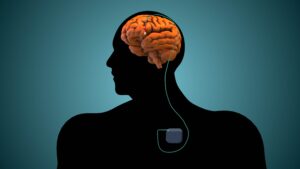
EASEE stands for Epicranial Application of Stimulation Electrodes for Epilepsy. The EASEE Brain Pacemaker is a small implant designed to reduce epilepsy seizures by delivering a combination of direct-current-like (DLS) stimulation and high-frequency stimulation (HFS).
During a minimally invasive procedure, the device is placed just under the skin on top of the skull, directly above the area of the brain where epileptic activity occurs, without actually touching the brain itself.
A thin wire runs beneath the skin, connecting the implant to a battery, which is also placed under the skin in the chest area. Because the entire system sits beneath the skin, it is virtually invisible and convenient for patients.
Because the surgery is minimally invasive, the associated risks are minimal. Some pain and mild swelling may occur where the device has been inserted. Typically, the device is left inactive for around 4 weeks to allow for complete healing. Once the patient has recovered, the doctor or specialist responsible will activate the device and adjust the electrical pulses to suit the individual’s needs.
Like LITT, this treatment is available on the NHS for people suffering from drug-resistant focal epilepsy. It is most useful when the epilepsy is in a part of the brain that would be risky to operate on.
The device may not work for everyone, but because it is small and thin, it can be safely removed from patients who do not respond to it. Results show that the device is well-tolerated, safe for long-term use and effective in seizure control without serious side effects.
These advancements in minimally invasive treatments provide great hope for those suffering from drug-resistant epilepsy. Particularly crucial is the involvement of the NHS in making these treatments more widely available.
These treatments are developed with the goal of improving the quality of life for people with epilepsy, and that’s our goal too. Epilepsy can be a debilitating condition.
That’s why we, at EpilepsyAlarmsUK, provide the UK’s most trusted range of epilepsy alarms and sensors, supporting individuals to live more independently and enjoy life to the fullest. To find out more, visit our products page or request a free info pack.
About The Author

Contributors

Dr Hilary Jones MBE is an English GP with over 40 years of experience practicing as a medical doctor in England. Dr Hilary Jones earned his medical degree in 1976 from The Royal Free Hospital in Londo... Read More